Ladakh – the word instantly paints a mesmerizing image of rugged and snow-clad Himalayas playing hide and seek with pristine water bodies and colorful monasteries on an endless horizon of clear blue skies. While for the well-versed traveler, Ladakh is a must-do, for most Indian audiences, a lot of credit for this image goes to the Bollywood blockbuster movie ‘3 Idiots’. The flight connectivity to Leh has made this jewel of the Himalayas accessible and economical (both in terms of time and money).


Even an impromptu plan like ours for a quick four-day visit, accounted for one full day of acclimatization. As we landed in the morning, day one was (as it should be) dedicated to complete bed-rest. In pride of our youth and presumably fit bodies we were confident of venturing out by evening. Or so was the initial plan. But nothing can prepare you for what hits you within an hour or so of landing in Ladakh. It’s not so much the feared difficulty in breathing, but simply the sudden slowing down of your body. The clock-work movement of the body and mind that is synonymous to city life steadily comes to a standstill. It is a literal unwinding of body, mind and soul.


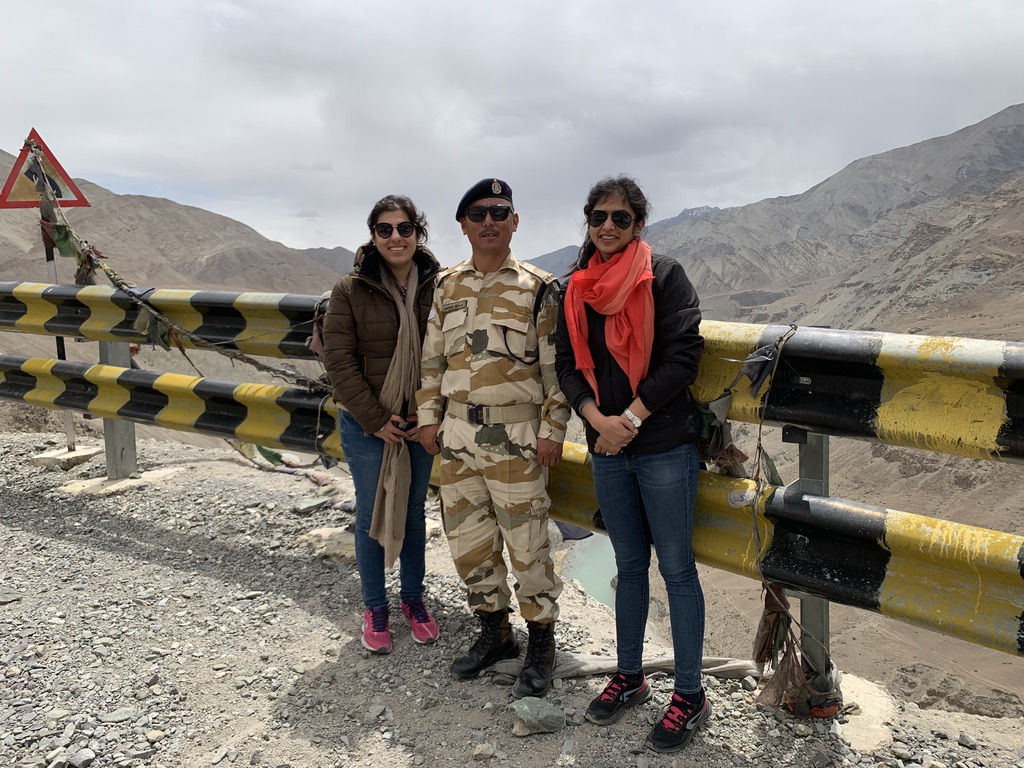
On day two, prudence suggests that you undertake local sightseeing to better acclimatize your bodies. In no mood or shape to resist, we followed suit. We started our day with a visit to the army-managed Hall of Fame, which is a museum and a memorial for the soldiers who lost their lives in Indo-Pak wars. Tracing the history of the region, the museum is a good starting point for orientation into the local cultural context. A quaint little building, it is guarded by life-size tanks on either sides with a Buddha statue at the center, aptly encapsulating how the lives of locals are intertwined with those of the forces. A distinguishing feature is the ubiquitous presence of the army and the Indo-Tibetan Border Police. The charm of forces towns is difficult to pin-point. Perhaps it can be traced to the well-maintained roads, manicured landscapes, and of course, the never-to-miss quirky Border Roads Organization’s (BRO) signs or in the more intangible feeling of pride and sense of security that those in uniform evoke.
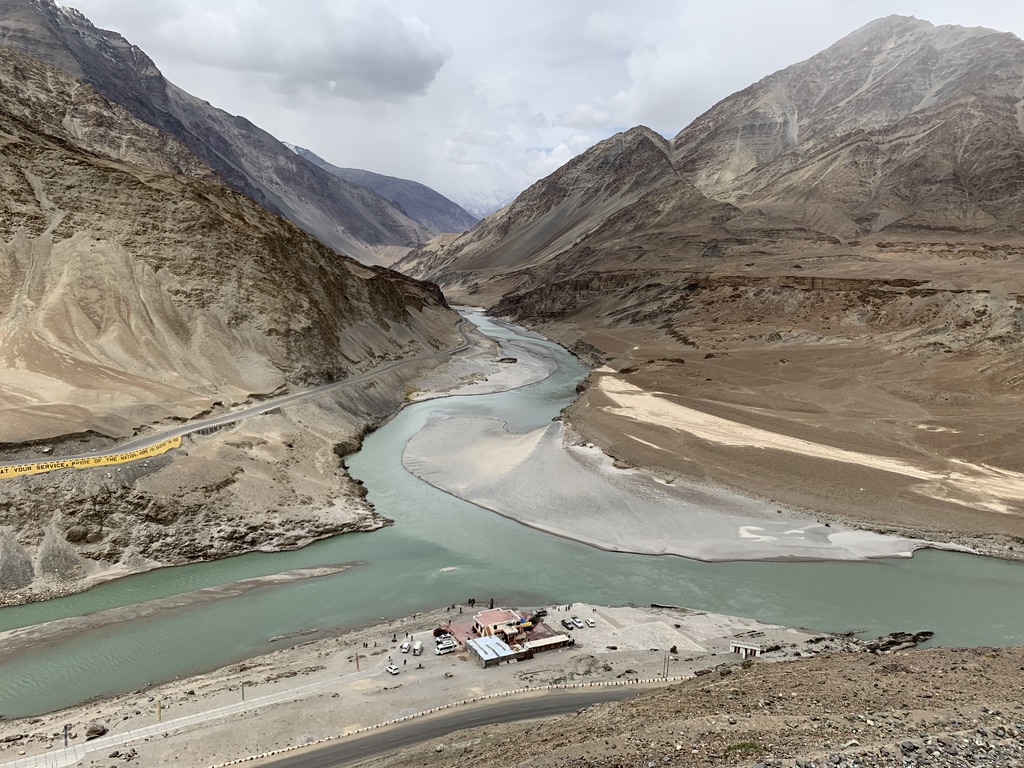
Next stop was Sangam Point i.e. confluence of rivers Zanskar and Indus. No photograph can capture its raw and rustic beauty – it is serene, barren and isolating. The landscape cancels out the noise and commotion of the small Sangam Café and the tourists behind you. You can actually hear your breath and feel the struggle of your lungs giving rise to that hollow feeling one gets while watching space movies like Gravity. Somehow many vistas in Ladakh will remind you of it. Maybe, it’s the combination of virgin beauty and heightened sensations owing to a slowed down body making it a journey both within and outside.
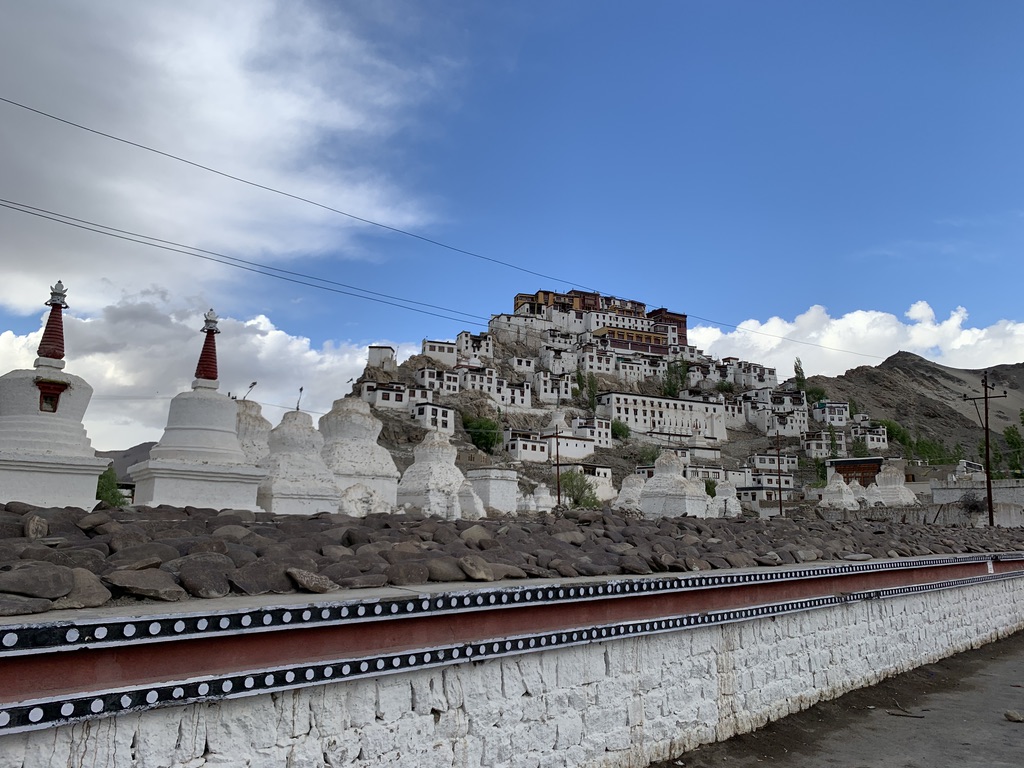
Moving away from the literal ‘other worldly’, the pious can turn to the religious diversity of the region for a more metaphorical sense of the phrase. You can trace the religious circuit which includes Gurudwara Pather Sahib, Shiv Mandir, Jama Masjid, Shanti Stupa and Shey, Thiksey and Hemis monasteries. Perhaps, our guide served as a good example of the melting pot that is Ladakh. A Budhhist educated in Urdu medium, he spoke Hindi and Ladakhi fluently, while enjoying Punjabi music the most. In this kaleidoscope of culture, the multicolored prayer flags that decorate the landscape assumed a new meaning.


If you ask the locals (or more precisely the local guides) highlights of Nubra Valley, you are likely to get two responses: double-humped camels and the shooting spot of Bhag Milkha Bhag. If for neither, go for the drive! In the six-hour journey from Leh to Nubra, we crossed the Khardungla Pass (the highest motorable road in the world), witnessed heavy snowfall, enjoyed Maggie and tea in small stall, visited the Diskit Monastery and drove through a sandy desert. While some vistas you can attempt to describe, others will leave you speechless. Honestly, on reaching Nubra you feel a sense of disappointment, a feeling that stems from the spectacular build-up that is the journey to this point. A popular camping site, it serves as a rest stop for those wanting to go further to TurTuk or return to Leh via Pangong Lake. The silence of the valley and clear skies make for more than just the perfect setting for star gazing; it can rejuvenate, no resuscitate you back to life!


On day four, we set out for Pangong Lake. Yes, be prepared for a lot of road journeys for the distances are sizeable and the roads are not always as you’d like them to be. As our car jumped and rocked from side to side, the solid, still mountains seemed to mock our every bump. After five-odd hours, our guide announced “that’s it,” pointing to a distant body of water between two mountains that seemed to merge with the horizon. The adrenaline rush one felt could be attributed equally to the site of the lake as well as the thought of the journey finally coming to an end. The site of the different hues of blue glistening against the backdrop of rocky mountains suddenly makes the entire effort worth it!
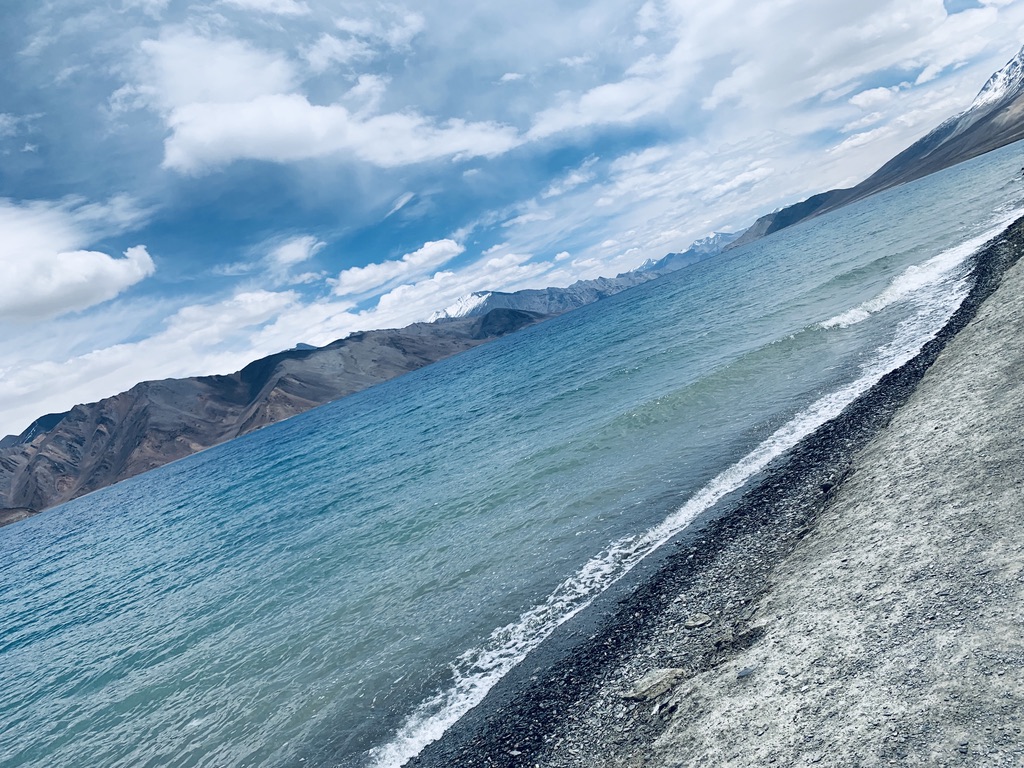
At any time of the day during peak season, the lake is bustling with tourists hankering for that perfect photograph. Courtesy movies like 3 Idiots (clear favourite) and others, you’ll find an entire section full of props to recreate the movies canvas. But if that is too much for you to handle, walk a distance and you can find solitude owing to the sheer size and expanse of the lake. Sit, relax and take in the vista.


On our journey back to Leh, via the ChangLa Pass (world’s second highest pass), again one crossed rugged mountain tops, the snow-covered passes, small hamlets, wide valleys and the sky as our constant companion. And suddenly as we turned the mountain and saw the expanse of Leh valley, having spent most of our trip on the road it all made sense.
Ladakh is a journey, both physical and emotional; one that is synonymous to life, replete with happiness, adventure, hardship, rainy days, and an element of surprise…because you never know what the other side of the mountain has to offer! Somewhere at Sangam Point, in Nubra Valley and at Pangong Lake, you realise that you, yourself, are the sole link between the earth and the cosmos, the known and the unknown, and simply between life and what it means to be living.



 PUJYA PRIYADARSHNI
Leave a reply to donald trump Cancel reply