When you hear the word Calcutta (or Kolkata to be politically correct), what image does it evoke – the famous battles of Bengal, Fort William of the East India Company, legends like Tagore and Vivekananda or is it the more contemporary Bengali literature, films and music? Whatever it may be, Calcutta is bound to rouse some emotions and associations. Why? Well, an inherent part of Indian history, culture and society, it is a celebrated city that carries this aura of awe and pride. Every Indian and most foreigners would invariably have a word or two to spare for Calcutta. Heritage after all, is inherited and passed on, with successive generations embellishing it along the way.
So what was my take on Calcutta, I wondered as I embarked the plane for my weekend (and first) trip to the City of Joy. Somehow, courtesy dusty history books and vibrant Bollywood portrayals, I imagined Calcutta to be a colonial city caught in a time-warp. I expected old structures juxtaposed against loud display of culture with the whiff of an heir-apparent arrogance. However, as the city unraveled before me, the incongruencies and imperfections made it the perfect mosaic of Indian identity today.


A history enthusiast, I found myself tracing the picture postcard images of Calcutta through the tram, Victoria Memorial, Indian Museum and Fort William. A must see, Victoria Memorial stands as living testament to the grandeur and vision of our colonial masters. The green expanse with the imposing marble edifice at its center is a sight to behold. Look beyond the ever-excited local tourists posing for selfies and admire the structure for its ornate detailing and architectural style. The manicured lawns with pebble-laden pathways will leave you nostalgic and wanting to know more about the lives of people back then. For this, step inside to view the art galleries that will help paint a picture of the bygone era. Though housing some of British India’s potentially most valuable paintings and unique exhibitions, the gallery is a letdown as the administration falters in upkeep and imagination. Efforts to improve the lighting on the paintings and the artists’ descriptions would serve as a good starting point.
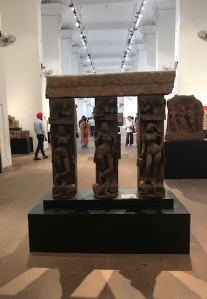 Notwithstanding this minor disappointment, one headed to the next stop the Indian Museum, which has the proud title of being India’s oldest museum. Though housed in a typical courtyard-centric palatial structure, from the outside you may almost miss it owing to the sprawling local street market that occupies the pavement leading to it. Inside, the diversity of the cultural and scientific exhibits will leave you mesmerized for it houses gems in terms of art, artifacts, relics, antiques and unique specimens of animal kingdom. However, the exhibitions themselves will leave you yearning for more thoughtful curation. It’s unfortunate that the regular footfall of bored school children and enthusiastic foreign tourists sustains such institutions, but they remain outside the purview of locals as places of choice for travel, education and entertainment. Perhaps, patriotism today ought to be in preserving and celebrating our historical legacy that is housed in such institutions throughout the country.


History is often intertwined with faith and religion and so for the pious and spiritual itinerants, Calcutta has the Kalighat Kali Temple, Dakshineswar Kali Temple and the Belur Math. One headed to the latter two early in the morning on the next day. (Note: Calcutta has notorious traffic complicated further by one-ways that change at certain intervals). After an hour’s drive, one arrived to Dakshineswar Kali Temple that sits across the Hooghly River from the Belur Math. A huge property, cleanliness and orderly crowd management on the premises will strike you even before you begin to admire the legendary Bangla architecture with the tasteful hues of cream and red. In the momentary hustle-bustle of the temple, the river provides purpose and a sense of eternal peace.
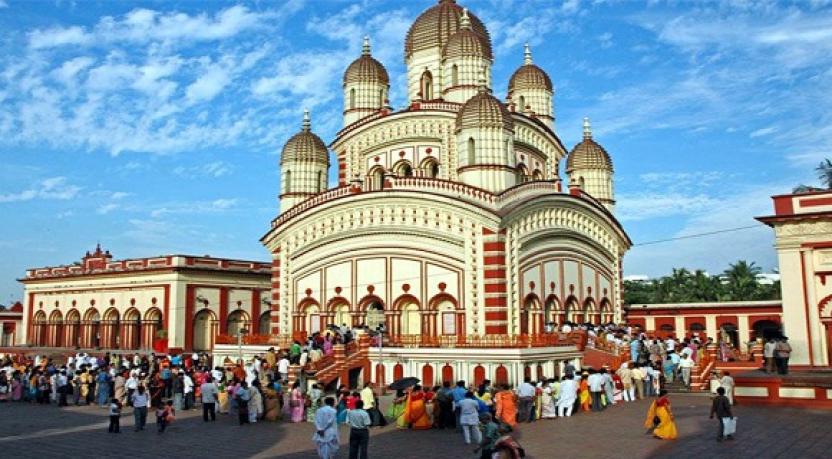
Photo credits: http://www.templeadvisor.com/temples-in-india/hindu-temples/dakshineswar-kali-temple
After the Darshan, head to the other side of the Hooghly to the Math. Even though the meandering roads through small (and dirty) bylanes make a tiresome journey, on entering the Math the energy is both palpable and contagious. Replete with structures old and new, it is the Sri Ramkrishna Temple that truly captures the essence of India in the 32,900 sq. ft. that it covers. Is it a temple, a mosque, a church or a synagogue? The architectural design won’t help you for it draws inspirations from places of worship of many faiths. So much like the syncretic culture of India that espouses for a ‘universal faith’, it’s your outlook and belief that can define this building housing Ramkrishna Paramhansa’s statue as the deity/inspiration/unifier at the helm. No wonder Calcutta is a microcosm of India. Here, the Hooghly serves as the elixir that sustains this melting pot of cultures, faiths and identities as it calmly purges the city on either sides. Perhaps it’s a metaphor for us today to find the Hooghly within us; one that is tolerant, stable and integrative.


While the above itinerary may suffice for the literati, the foodies shall not be left disappointed. A street food extravaganza, it can be best discovered with guidance from a local for most renowned vendors with city-wide recognition only have a make-shift cart to their name. Do try ghugni, puchkas (pani puri), kathi rolls and momos off the street, but look the other way if you have hygiene concerns. Those seeking more sanitized environments may head to local chains such as 6 Ballygunge Place for authentic Bengali meals. Wait. Again, what is ‘authentic’ in Calcutta? While instinctively images of fish and rice may emerge, one cannot ignore the Marwari cuisine (vegetarian) nor the Chinese cuisine in Chinatown (despite a dwindling Chinese population). And they all will agree on the desserts that range from traditional Bengali sweets such as Sandesh, Roshogolla (despite the GI tag controversy) and Mishti Doi to the more local and ingenious fruit kulfis (Indian ice cream). Simple, everyone belongs to Calcutta!
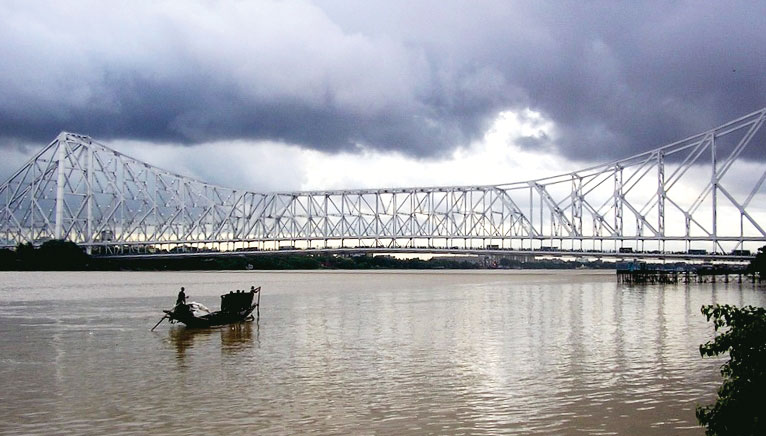
Photo credits: https://www.britannica.com/place/Hugli-River/media/271249/145308
However, Calcutta does not belong to anyone. With invaders and rulers hankering to stake a claim, it has been a bone of contention throughout Indian history. And time and again Calcutta forged a new trajectory. Whether it was the struggle of Mughals starting with Humayun or the advent of East India Company’s reign with the Battle of Plassey or the 19thcentury Indian renaissance, Calcutta continuously reinvented itself and India.
Calcutta…the word is local, national and international in the same breath. Durga Puja pandals. Howrah Bridge. Eden Gardens. There is something for everyone; there is a little bit of Calcutta in all of us.


 PUJYA PRIYADARSHNI
Leave a reply to Lal Bhatia Cancel reply